Track your fitness & health online with these apps and websites

Whether you are just starting out with a new fitness routine, or if you’re a seasoned veteran fitness guru, it’s still difficult to navigate the endless amount of fitness apps for your phone and health websites online. However, one of my favorite fitness websites, Greatist.com, came out with an easy-to-read infographic with their recommendations for tracking your fitness online. Besides showing some of the top websites and apps it gives you reasons why it’s important to track your fitness online.

  • You’ll be more motivated.
  • It gives you more accountability.
  • You’ll benefit from planning.
  • Consistency.

Also, one website/app that didn’t make the list was endomondo.com. This website is a social network that allows you to track your workouts using a GPS tracking system in your phone or watch and share your results with the Endomondo community. You can create and accept challenges from other followers or just keep to yourself. Either way, it is a good way to track your progress as you continue your fitness routine.

(I think it goes without saying that Fit Girl Happy Girl is also one of the best fitness blogs out there!)
More Health and Fitness News & Tips at Greatist.

The argument for running naked

Scandalous, I know. But running naked may be the change you need to enhance your running routine. I’m not talking about ditching your shorts and t-shirt, but taking out the earbuds, leaving the phone at home and taking your eyes off of the television. Running without technology can help you get in touch with yourself as a runner and teach you to focus solely on your run.

Since I started my running routine, I always wore headphones and listened to music. Mostly because I was using an app on my phone to train but also because I thought I’d get bored just running with nothing else to do. The other day I forgot my headphones when I went to the gym. I wasn’t going to not run because of this so I ran naked (without tech). I felt that I had a much easier time focusing on my breathing and pace and was actually able to PR. I couldn’t believe what a difference it made in my stride!

A recent article in Runner’s World quoted Ben Agger, Ph.D., director of the University of Texas at Arlington Center for Theory, saying, “Wearing technology while running intrudes on the mind’s attempt to give itself over to the body.”

In essence, constantly checking your watch to monitor your pace, distance and calorie count actually takes away from your run rather than improve it. Being focused on the numbers means you’re losing focus of the actual run. Also, we all have a set number in our mind, whether it be a PR time or distance, and focusing too much on that can actually limit you in your ability to get to that goal. Numbers can be motivational but they can also put a lot of stress on your runs.

When it comes down to it, it’s all about personal preference. I asked some of my fellow members of the sub-30 Club on Facebook and the responses were about 50/50. Some people said they like to run with tech so they can know if they are improving in their training. Others said they switch it up and run with tech indoors and without tech outdoors. But a slightly larger portion of the responders said they enjoy running naked because they can get in tune with their running body.

For me, I enjoyed running naked. I was able to focus on my pace, form, breathing and what my body was telling me, instead of what the numbers read on my phone. Running is supposed to be fun, so savior the experience!

Reach your running goal? Learn how to add more miles

Today was an exciting day because for the first time since starting the Couch to 5K program in March, I reached 3.1 miles without taking a break or feeling like I was going to keel over and die. I got to the 3.1 mark at 33:33, and that included a 5 minute warm-up walk. I’m hoping that as I continue my running routine I can shave off some time by cutting down on the warm-up, in order to run a sub-30.

For the rest of you who may have reached your running goal and want to push further to build endurance,  Jeff Galloway, from Runner’s World, wrote up a simple training plan to help you double your endurance in only six weeks.

First off, the article says you should shoot for running three times a week. Right now I run three days a week with crossfit (cardio kickboxing, strength training, target training etc.) in between. However, it is important to let your muscles rest before and after running because then they’ll be fresher for your next run.

The article also suggests designating each day for a different kind of run. One day can be for a “maintenance” run, a run that maintains your fitness and is easy-going. Another day can be for a long distance run, this is the day you’ll begin to increase your mileage. The third day can be set aside for speed play, or “fartlek” (funny word, I know). On a speed play you want to start running at a normal pace and pick up your speed when you’re ready. The article says you can focus on an object and sprint towards it then job for recovery.

As always, remember to pace yourself and stay hydrated. You don’t want to lose all of your energy at the start of your run at the risk of becoming exhausted, so start slow in the beginning and pick up the pace as each miles passes.

Here is the training plan designed by Runner’s World to build mileage in six weeks:

Week ONE:
Maintenance (Miles) – 3.5
Fartlek (Miles) – 3
Long Run (Miles) – 4

Week TWO:
Maintenance (Miles) – 4
Fartlek (Miles) – 3.25
Long Run (Miles) – 5

Week THREE:
Maintenance (Miles) – 4
Fartlek (Miles) – 3
Long Run (Miles) – 4

Week FOUR:
Maintenance (Miles) – 5
Fartlek (Miles) – 3.5
Long Run (Miles) – 6

Week FIVE:
Maintenance (Miles) – 5.5
Fartlek (Miles) – 3
Long Run (Miles) – 4

Week SIX:
Maintenance (Miles) – 6
Fartlek (Miles) – 3.5
Long Run (Miles) – 7

Trying to run a sub-30 5k? Join the club!

"The hardest step for a runner is the first one out of the front door."

As I was perusing Twitter the other day, I came across a tweet from Runner’s World promoting a new club set up by RW blogger Ted Spiker. The club is called the sub-30 club and its goal is to help motivate runner’s who are trying to run a sub-30 5K.

“What I’ve come to realize is that even though a 30-minute 5K is barge-like for many,” Spilker writes, “plenty of other runners are working their knickers off in an effort to drop the 3 for a 2.”

This could not be truer. While running a sub-30 doesn’t seem like a huge feat to seasoned runners, for the newer runners out there it is an admirable goal. I just started getting into running in February and while I haven’t run my first 5K yet, it’s my goal to run it in at least 29:59 minutes. To reach my target time, I thought I’d join the club and help out other runners who have the same goal.

So, if you’re trying to run a sub-30, or if you already have and are looking to help motivate some newer runners, join the sub club. We can all use a little extra motivation here and there so I would suggest joining on Facebook at The Sub-30 Club (from RW Big Guy Blog).

(While you’re at it, like my Facebook page to stay up-to-date on Fit Girl Happy Girl)

Boston Marathon Infographic

I am so sorry for neglecting my blog the past week, school has been crazy busy but don’t fret, I will be back in full force tomorrow with some new blog posts. In the meantime here’s a cool infographic from yesterday’s Boston Marathon. As a Massachusetts native, and the daughter of a former marathoner, Marathon Monday has always held a special place in my heart. My dad ran the Boston Marathon a total of eight times during his running days and I can only hope to run it some day.

Interval training with treadmill workouts to switch up your run routine

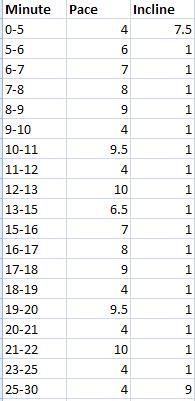
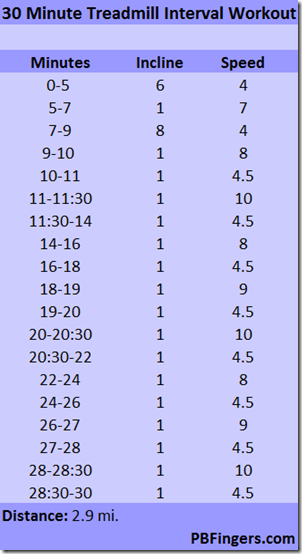
While running outside is probably the most enjoyable way to run, sometimes the weather or other circumstances force me to head to the gym and do treadmill runs instead. Since I started training for the 5k, many of my runs have been on the treadmill because they mostly consist of interval training. Whether you are training for a race or trying to build your endurance, interval training can be a great way to mix up a boring run routine. Also, by trying out some interval runs, you can be sure to be kept on your toes and challenged as you constantly switch speeds and incline levels. I found some really great interval exercises, on the fit blog, Peanut Butter Fingers, to do on the treadmill to help you mix up your normal run.

30-minute Treadmill Workout:

30-minute Treadmill Interval Workout

45-minute Treadmill Workout

Be sure to check out more interval training on Peanut Butter Fingers!

Anatomy of a good pair of running socks

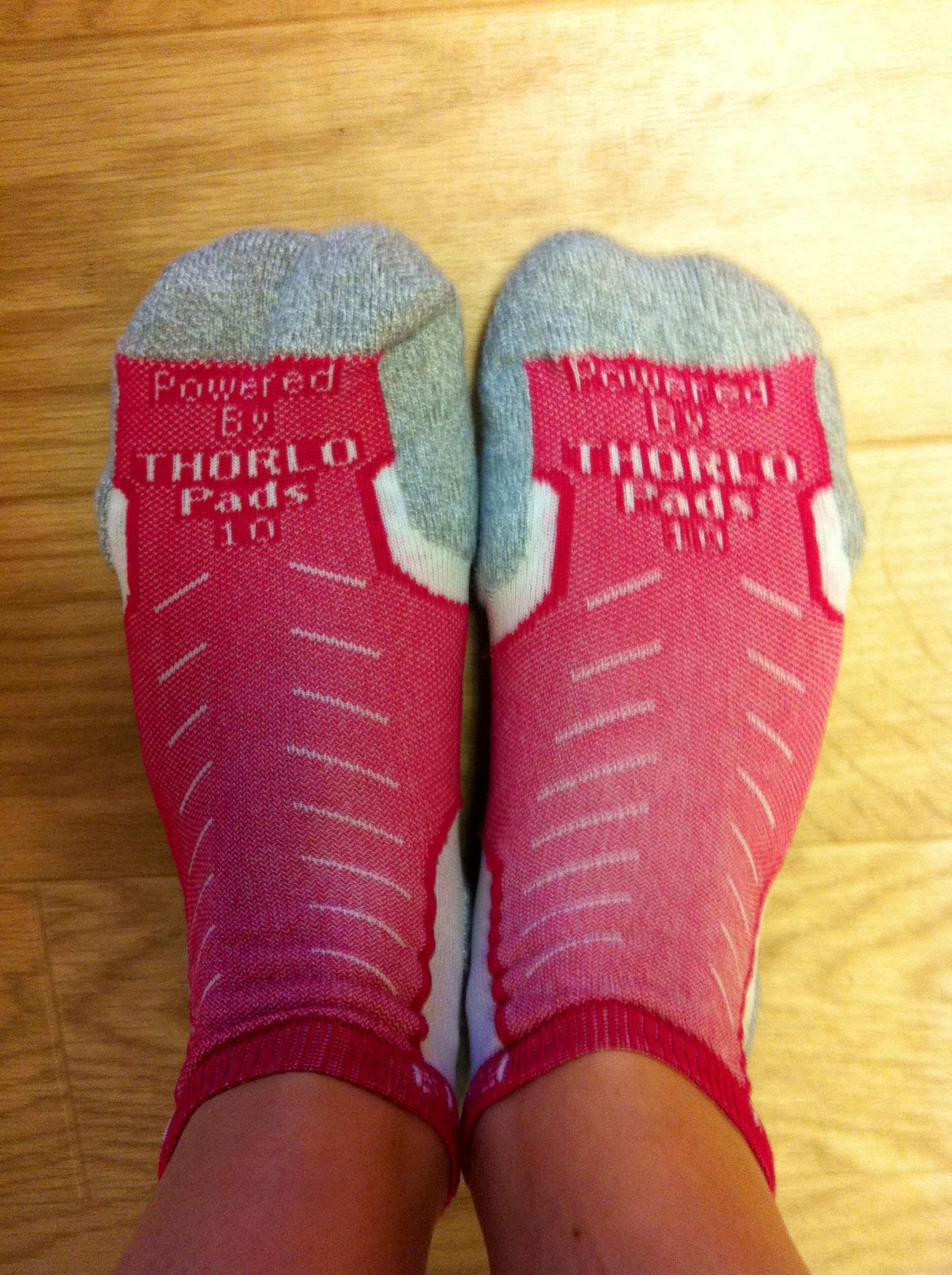
Do not underestimate the power of a good pair of running socks, they will change the outcome of your run, I can guarantee it. My dad used to be a marathoner and he told me that my mom would meet him at 13.1 miles in just so he could change his socks. Yeah, they’re that important.

I just invested in a new pair of running socks, totaling $12.00 for one pair, but it was so worth it. Whether you’re running a marathon, a 5k or just going for a jog, the cushioning provided by a good pair of running socks will help you to sustain the run. A good pair of socks should be lightweight, cushioned and able to absorb moisture.

Livestrong.com says “The ideal socks for running a marathon will tolerate miles of pounding during training and complement your running shoes ability to provide stability. Livestrong gives three criteria that must be met in looking for a new pair of running socks- material, cushioning and stitching.

  • Material- You want to look for a running sock made out of material that will draw moisture away from your feet and that will be able to withstand the rigors of training and multiple washes. Cotton socks tend to give blisters because cotton absorbs sweat and chafes easily against skin. It’s best to chose a sock made out of synthetic material like polyester and spandex because they are designed to pull moisture away from the foot. Not all natural fibers are bad however. Material such as bamboo can have natural tendencies to pull moisture away.
  • Cushioning- Cushioning in socks is extremely important because it can help stabilize the foot while running. When choosing a sock for running the cushioning depends on your foot type. If you have a high arch you may want to opt for a sock with more cushioning in the center to provide stability. Other socks offer cushioning in the heel and ball of your foot to combat pronation and again to stabilize the foot. It’s best to consult with a speciality running store to determine your foot type and the sock most appropriate for you.
  • Stitching- When running for prolonged amounts of time, it’s important to avoid chafing and irritation that may result in blisters. According to Livestrong “Hand-linked or seamless toe enclosures help prevent chafing at the top of the toes. Look for socks featuring “Y” and “W” stitched heel gores which further improve the socks fit.” This will help prevent the sock from slipping down while running.

Are you guilty of treadmill racing?

(via Pinterest)

As a new runner, I’m certainly not one who should be openly admitting this but, I will admit that I usually glance down at the speed of the runner next to me on the treadmill. It’s called treadmill racing. It’s petty and I don’t really gain anything from it, but what can I say? I’m competitive.

Since I have been training for my first 5k, I’ve been doing most of my runs on the treadmill because the program calls for a lot of interval training and I find it easier to monitor my time on the treadmill. But I’ve noticed a trend at my gym among the runners to my left and right. Occasionally, my co-runners will glance down at the speed I’m running, and in turn I tend to do the same thing. It’s mostly out of curiosity but I think this bad habit can cause some people to become uncomfortable. For me, when someone next to me is running faster, instead of feeling bad about not going as fast, I use it as motivation for future runs.

However, I also know that some gym-goers can be uber-competitive, making you feel self-conscience of your running. But, keep in mind, you don’t know what they are training for, whether it be sprints or distance, and they don’t know what you’re training for, so be confident in your running!

Women’s Health Magazine suggests setting the time you want to run and then covering the display with a towel to ward off any wandering eyes. Don’t worry about your neighbor’s speed because it’ll distract you from your own run. If treadmill racing is too stressful, opt for an outdoor run, free of competition and numbers. Outside you are running your own speed, and no one can one-up you on that.

Kickboxing: Learn to Hit Like a Girl

Destroy what destroys you. Kick it! (via Pinterest)

Over the past few years women’s interest in kickboxing has been steadily increasing and they are getting hooked on the one-two punch of the high intensity cross-fit cardio workout. The decision to debut women’s boxing in the 2012 Olympics this summer also reflects the growing interest in the sport, leading more and more gyms to host cardio kickboxing classes.

Cardio kickboxing classes are typically one-hour long and provide a dynamic exercise that includes both cardio and resistance training. If you’re a runner this workout is ideal to not only improve your stamina and endurance but to build long, sleek muscles that will help you feel stronger during your run and push your hardest come race day.

Kickboxing provides you with a complete, all-over body workout. Because it doesn’t just target specific areas, it allows you to strengthen, tone and reduce fat all over at the same time. It also helps to increase flexibility and especially reflexes.

Self-defense is another added benefit of taking a cardio kickboxing class. During an average kickboxing class, the instructor teaches you different kicks (round-house, side kick, back kick, etc.), punches (jabs, hooks, uppers, ribs, etc.) and how to learn to keep your guard up and to bob and weave. While not all cardio kickboxing classes use punching bags, the instructor will help you learn how to gauge the distance of your target and how to through a proper punch, all while remembering to keep your guard up and protect yourself.

Not only does kickboxing give you a serious workout (burning on average of 1,000 calories in a single one-hour session) it also is a good way to relieve stress. The instructor always reminds you to think of your target, whether that be a person or a thing that is causing stress in your life- letting out your aggression in a class is much better than actually letting it out on the person or thing. According to the American Fitness Professionals Association, “Stress, however, produces enzymes that reduce your supply of endorphines. If you don’t exercise to stimulate that supply of endorphines, you will consequently not feel as well as you could.”

More than anything, kickboxing also helps you to build confidence and self-esteem. For me, taking kickboxing classes is a stress reliever and it helps me to know that I can take care of myself and nothing is too hard to overcome. When I walked into my first kickboxing class I didn’t know if I was going to be able to make it out alive! But as I continued to take class (I now go three or four times a week) my endurance started to build and I realized that I was strong enough to make it through the class. And for some reason, the reaction I get from people when I tell them I do kickboxing is too good to ever give up, so keep your guard up and learn to hit like a girl!