This is a great video with those pesky little last-minute tips you need before not only a marathon but any big race. Check it out!
Last Minute Marathon Tips: shot with Nikon D90 from Mike Kobal on Vimeo.

This is a great video with those pesky little last-minute tips you need before not only a marathon but any big race. Check it out!
Last Minute Marathon Tips: shot with Nikon D90 from Mike Kobal on Vimeo.
 When I started running, I kept hearing about tempo runs. I thought they sounded intimidating so I never attempted one. I knew they would good for speed work, but my focus was distance. I knew they were good for strengthening, but I did weight training. I also knew they were good for building endurance, but my three-times-a-week cardio kickboxing class did the trick for that. What I didn’t know is that when you start working full-time, it’s not as easy to run long runs every other day with cardio kickboxing classes in between.
Tempo runs are perfect to throw into any consistent running routine because they have the benefits of endurance and strength training packaged into one workout. As I train for the half-marathon in September, I’m learning tempo runs will be the key to allowing me to run the full 13.1 miles without being as tired.
Distance runners use tempo runs not only to work on speed but to increase endurance. According to an article on Runner’s World’s website, the “best predictor of distance-running performance is your lactate threshold, which is the speed you are able to run before lactic acid begins to accumulate in the blood. ” After lactic acid is released into the blood, you start to feel fatigued and will have to slow down. Tempo runs help to slow down this process and in essence, speed up your run.
Traditional Tempo Run
If you haven’t tried a tempo run before, I would suggests starting with a traditional tempo run first. This consists of a 2-mile jog warm-up to loosen up your muscles and get your heart rate up. Then, you run for 2-miles at a “tempo” pace. This is NOT a sprint! Tempo pace is typically referred to as “comfortably hard.” You want to run faster than your normal pace but not so fast that it becomes difficult. After you finish the 2-mile tempo run, conclude your workout with a 2-mile jog/walk cool down.
As you start to get better at this, add a half a mile to your tempo run every two weeks. Pretty soon you’ll be able to run up to 6 miles at tempo pace.
Interval Tempo Run
If this is difficult, another option is to do a modified tempo run my uncle showed my cousin and me last weekend. This endurance-building run is easiest to do on a track. Start off with a 1-mile warm-up run around the track. Once you’re done with that, beginning at the 100-meter mark (the straightaways of the track) run at a fast pace, again NOT a sprint, but a pretty comfortably hard pace. When you get to the curve of the track, slow down to a jog to recover your breathe. Repeat this 8 times, equaling 2 miles. Then, do another 1-mile jog/walk cool down.
As always, don’t forget to stretch!
 As I continue to train for the half-marathon I plan to write updates every week about the training, complications, new findings and whatever else may come up. This is the first update!
This weekend my cousin and I officially began training for our half-marathon in September. We started our training in southern Maine, along the coast, since our race will be on the coast of New Hampshire. The weather was perfect for running. The air was clear, it was sunny and there was a cool breeze coming off of the ocean. Not to mention the gorgeous views we had during the run.
We both ran separately on Friday evening but then did an easy 3-mile run along the ocean Saturday morning. We also did some conditioning and a tempo run at the high school track on Sunday.
It was my first ever attempt at a tempo run and it went pretty well. We did a 2-mile run, with sprints for every straightaway. We made pretty good time, despite the heat.
This week I plan to do another tempo workout, an easy 4-mile run and a longer run this weekend. The half-marathon will be the longest my cousin and I have ever run but we’re getting really excited for the race. We have about four months to train and we are staying positive. As one of my fellow sub-30 club members wrote, “Just keep putting one foot in front of the other and you’ll get there.”
That’s it for now but be on the lookout for a post about tempo runs soon! Also, don’t forget to “like” my Facebook page and follow me on twitter @FitHappyGirl.
Are side stitches cramping your running style? They were for me last week when I began training for the half-marathon. But after a little research I learned that you can actually overcome them with a few basic tricks.
Medically speaking, a side stitch is a spasm or cramp of the diaphragm muscle. There are many reasons a side stitch can occur including dehydration, bad running form or just general fatigue. For me I think it could be dehydration but according to many of the blogs and message boards I’ve read, side stitches tend to occur early on in a runner’s career. I’ve only been really running since March so that could also be the reason.
Whatever the cause, there are easy cures for side stitches. The For Beginners Only blog on the website for Runner’s World suggests massaging the area in pain. As always with a side stitch, you should stop running first, then:
“… press your first two fingers in and slightly upward directly where it hurts and hold for about 10 seconds. While pressing in and up, take more deep breaths. You can continue this process of pressing in and up, all around the edge of your ribs up to your sternum.”
Another technique I used last week that worked was to slow my pace, or come to a walking pace, and stretch my right arm over my head to stretch out the right side of my abdomen. If the stitch is on your left side, use your left arm. This worked well and helped relieve the pain so I could continue running.
The best news about side stitches is that with continued exercise and running, they should go away altogether. So, stay hydrated, stretch before a run and hit the pavement!

Courtesy Runner’s World on Pinterest
Ok, so finding the perfect half-marathon training program is a little harder than it seems. Last week I registered for my first ever half-marathon and it without a doubt terrifies me. However, according to most of my research, if you can already easily run 4 miles, in less than 14 weeks you can build up to a half-marathon- I have four months.
When looking for any good training program it’s important to stay realistic. For example, if you have a full-time job and a fluctuating schedule like myself, running every day is probably not a very realistic goal. Most of the training programs I found have you running three or four days a week with strengthening exercises and rest days in between.
After asking around and posing the question in the Sub-30 Club on Facebook, I found a good training program for me. I chose to use the Runner’s World Smart Coach (free version). This training plan allows you to insert your information- including gender, miles logged per week and your latest race time- to develop a specialized plan to fit your schedule. This is important for me because I am a full-time reporter so sometimes I have to cover late meetings and can’t fit in my run, but the smart coach allows you to adjust the plan at any time.
Also, the smart coach, like many other half-marathon training program, has you run an easy run, a “tempo” run (speedwork) and a long run each week. As your training continues it adds in an extra easy run to help you build endurance to last those 13.1 miles.
This program might not be for everyone so some other suggestions I received were:
First off, let me apologize for my infrequency of posts lately. I started my first job after graduation last Monday and have been extremely busy getting used to that. Although it’s affected my blog-writing schedule, it has not affected my workout schedule which is a fantastic thing I think. Last Sunday I went on an amazing 6-mile run along the coast of Maine in 45 minutes, quite the accomplishment for myself! Also, yesterday I registered for my very first half-marathon!! I’m so excited and cannot wait to start training for this!
I have a bunch of posts planned for the next week so please, please, please check back!

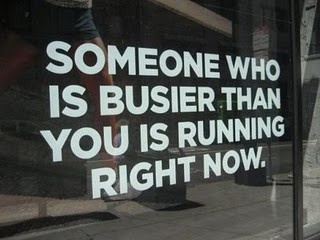
Someone who is busier than you is running right now.
“Someone who is busier than you is running right now.” Ain’t it the truth! Today is my first day out in the so-called “real world” as a working adult. I am fortunate enough to have landed a full-time job right after college graduation in my field of study, doing exactly what I want to do. A lot of my peers were not as lucky, so in honor of them I refuse to let my new busy schedule get in the way of my running. Being busy is no excuse to stop, so I’m not going to let it. Happy running!
 On Monday, I start my very first “real-life” full-time job (yikes!) and besides the nervous first day jitters, all I can think about is how am I going to maintain my workout schedule while working 40 hours a week? I know this is not an impossible task by any means but it definitely will mean more determination, planning and a little extra will power to fight with that voice inside my head that’ll be saying “you’re tired.”
However, according to a great little article on one of my fav fitness blogs, the Greatist, planning ahead and literally marking gym time on your calendar is proven to help you stick to your fitness program. It said that marking gym time into your calendar like you would a meeting or a friend’s birthday will make your fitness time as important as these other cannot-miss appointments. So that’s what I did. I marked my gym time into my weekly calendar so I can’t make any excuse to skip. It also will hold me accountable for sticking to my plan.
The Greatist article also gives some other tips on how to stay true to your fitness program, some of which are extremely important to keep in mind.
Whether you are just starting out with a new fitness routine, or if you’re a seasoned veteran fitness guru, it’s still difficult to navigate the endless amount of fitness apps for your phone and health websites online. However, one of my favorite fitness websites, Greatist.com, came out with an easy-to-read infographic with their recommendations for tracking your fitness online. Besides showing some of the top websites and apps it gives you reasons why it’s important to track your fitness online.
Also, one website/app that didn’t make the list was endomondo.com. This website is a social network that allows you to track your workouts using a GPS tracking system in your phone or watch and share your results with the Endomondo community. You can create and accept challenges from other followers or just keep to yourself. Either way, it is a good way to track your progress as you continue your fitness routine.
(I think it goes without saying that Fit Girl Happy Girl is also one of the best fitness blogs out there!)
 More Health and Fitness News & Tips at Greatist.
I apologize again for the late post. This morning I had to drop off my final college paper and pick up my cap and gown. Yikes! Hopefully this video will make up for my tardiness. If you haven’t seen this yet, what have you been doing! I’m in love with this video and it’s definitely a motivation booster. Take a look see and ask yourself, who would you run across America for?
 Fit Girl. Happy Girl.